Read this story in Nepali: विषादीको नियमन र नियन्त्रणमा कमजोर राज्य संयन्त्र
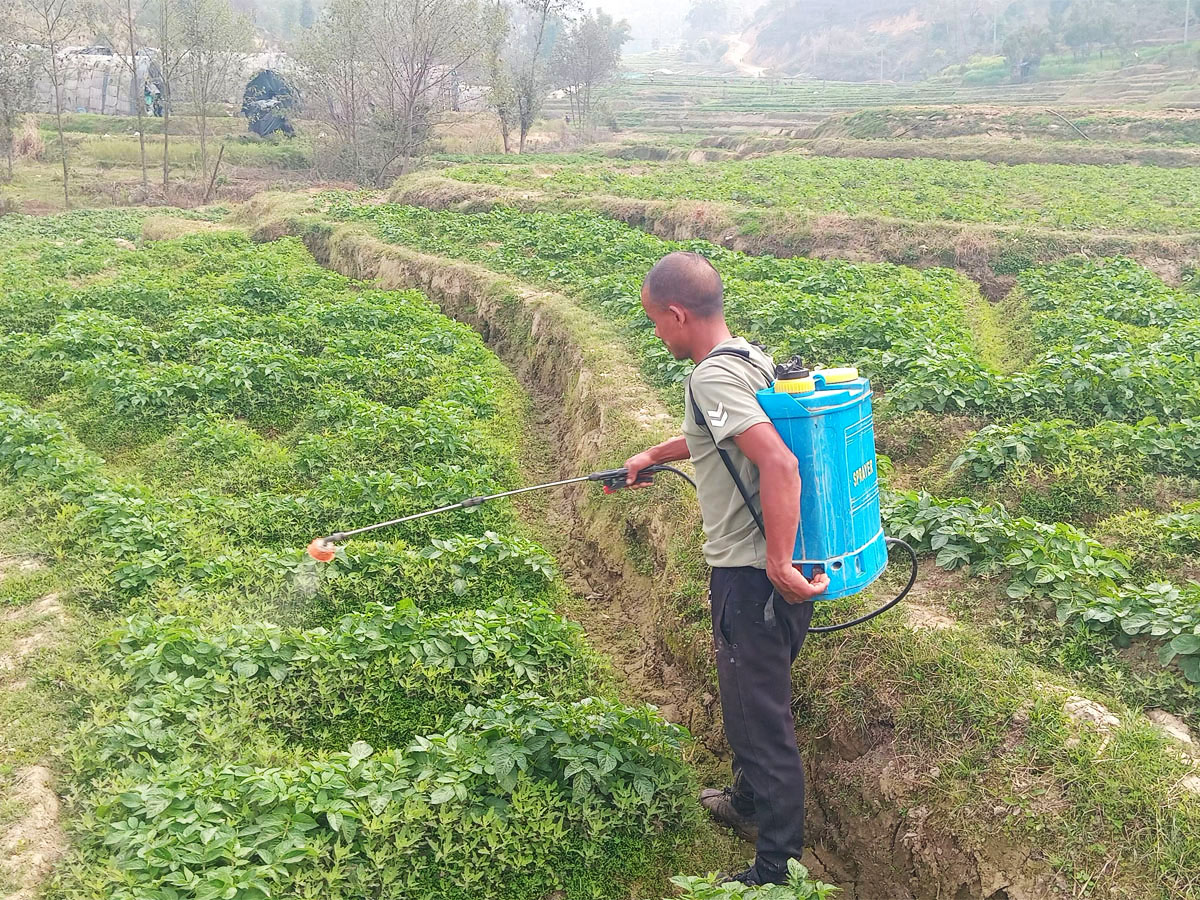
Although indiscriminate use of lethal pesticides by farmers in their fields is harming human health, the presence of the state in regulating and controlling pesticides appears to be weak.
According to the National Agricultural Census, 2078 (2021/22), the growth of pests and insects in Nepal is at 60.8%. With the increase of new pests, farmers have started using pesticides even on crops like rice, maize and wheat.
 The data from the same census shows that 232,836 farmers use pesticides on maize, wheat and potatoes. Furthermore, 39% of farmers use pesticides on rice.
While the average use of pure pesticide per hectare in Nepal is 396 grams per year, its use on vegetable crops averages 1,605 grams per hectare. A pesticide survey by the Plant Quarantine Office revealed that approximately 80% of pesticides used in agriculture are for vegetable crops. Despite this, a review of pesticide import data over the last four years shows that the volume of imports has doubled.
In the fiscal year 2076/77 (2019/20), pesticides worth Rs. 79,383,946 were imported. This increased to Rs. 2,430,591,400 in the fiscal year 2080/81 (2023/24), according to data from the Plant Quarantine and Pesticide Management Center.
The increase in imports is a direct result of farmers increasing their consumption of pesticides in their fields. Easy and accessible access to pesticides has led to farmers' increased use on crops and vegetables.
While the use of chemical pesticides on food and vegetable crops is increasing, the government has been unable to regulate and control it. The misuse of pesticides has grown because farmers have not been given proper training and technical knowledge about the correct amounts and methods for using approved pesticides.
Instead, the responsibility of teaching farmers how to use and recommend pesticides has fallen to the owners of agrovets, who sell these products. Farmers are relying on the knowledge and recommendations provided by these pesticide vendors, which puts the health of not only the farmers but also the general public at risk.
According to Schedule 8 of the Constitution of Nepal, 2072 (2015), local governments have exclusive rights over agriculture, animal husbandry, agricultural production, and the development of agriculture and animal factories. Furthermore, Schedule 7 of the same constitution places pesticides and medicines on a shared list of powers for both the federal and provincial governments.
The Local Government Operation Act, 2074 (2017) also clarifies that local governments are responsible for farmer training, capacity building, and increasing consumer awareness.
Despite the fact that the constitution and laws grant significant authority to all three levels of government, there is a lack of attention to the regulation and control of chemical pesticides.
The Department of Agriculture, under the Ministry of Agriculture and Livestock Development, has acknowledged that while the risks of pesticide use have increased, they have not been able to mitigate them.
"The responsibility for providing public awareness training and technical services about pesticides rests with all three bodies: the federal, provincial, and local governments," says Jagannath Tiwari, spokesperson for the Department of Agriculture. "A lack of coordination among these three levels, as well as a shortage of technical staff at the local level, has prevented this serious and sensitive issue from being prioritized."
Senior Crop Protection Officer at the Plant Quarantine and Pesticide Management Center, Manoj Pokharel, states that the results of pesticide regulation and control have not been seen because agricultural mechanisms were formed very late after the implementation of federalism, and the process of fulfilling the necessary laws and manpower is still ongoing.
Experts accuse the government of failing to implement the Pesticide Act, 2075 (2018). They claim that the government has been limited to only importing pesticides, banning the registration and use of some deadly pesticides, and issuing licenses to agrovets and sellers for the distribution of pesticides.
"Pesticide imports are increasing but there are problems in regulating and controlling how those pesticides are being used," says entomologist Kashinath Chilwal. "The state is already late in taking steps to reduce pesticide use, provide alternatives to farmers, and teach them how to use pesticides safely."
Six provinces do not have pesticide inspectors
Section 24 of the Pesticide Act, 2076 (2019/20) gives federal and provincial governments the authority to appoint pesticide inspectors.
Section 25 of the same act gives these inspectors important powers, such as monitoring pesticide sellers, making sudden inspections of commercial pesticide use and storage, and, if adulterated or low-quality pesticides are found, halting their sale or sealing off the distribution area.
Despite these significant responsibilities and powers, there are only 26 pesticide inspectors at the federal level and 11 in Gandaki Province. The federal inspectors also serve as crop protection officers. Experts accuse them of not prioritizing pesticide regulation and control because they are primarily responsible for tasks like identifying crop diseases and pests and treating crops.
Shaligram Adhikari, head of the Crop Protection Laboratory in Pokhara, stated that Gandaki Province appointed 11 pesticide inspectors in all districts except for Manang and Mustang three months ago. He noted that due to a lack of resources, technical expertise and infrastructure, the province has not been able to make a significant contribution to pesticide regulation and control. He also added that the agriculture sector is not a priority for elected representatives.
The other provinces have not appointed any pesticide inspectors. "Since the provinces have not been able to appoint pesticide inspectors, agrovets are not being monitored," says Sudhir Paudel, head of the Crop Protection Laboratory in Bagmati Province. "We haven't even been able to show the office's presence in the field."
Even though Koshi Province issued the Pesticide Act, 2081 (2024) last February, it has not yet appointed any pesticide inspectors. Dr. Sharan Kumar Pandey, Secretary of the Ministry of Industry, Agriculture and Cooperatives for Koshi Province, stated that while the act is in place, the regulations are in their final stages and pesticide inspectors will only be appointed after the regulations are finalized.
This year, Bagmati Province has only drafted and sent the Pesticide Act to the Ministry of Agriculture and Livestock Development. The other four provinces have not been able to introduce a provincial Pesticide Act, even eight years after the implementation of federalism.
Section 40 of the Pesticide Act gives the responsibility for monitoring to a Pesticide Management Committee, which is to be formed in each province. However, since the provinces have not been able to introduce their own acts, these committees do not exist.
"There is no coordination between the federal and provincial governments to regulate pesticides and agrovets," said Santosh Pandey, an agricultural officer in Panauti Municipality, Kavre. "It's difficult for local governments to carry out such tasks due to a lack of agricultural staff and resources."
Pesticide residue rapid testing limited to formality
Pesticide residue rapid testing is conducted to determine whether vegetables and fruits produced with pesticides are safe to eat, unsafe, require a waiting period, or must be destroyed. The Central Agricultural Laboratory has the authority to test pesticides in domestically produced agricultural products and fruits, while the Department of Food Technology and Quality Control is authorized to test imported ones.
There are 12 pesticide residue rapid testing laboratories located in Jhapa, Sarlahi, Kathmandu, Kaski, Rupandehi, Banke, Kailali, Dharan, Kawasoti, Sindhuli, Dhalkebar and Surkhet. However, these labs are not equipped to test for residues of all the pesticides used in Nepal.
The government has also authorized the sale and purchase of pesticides from groups other than carbamates and organophosphates. Farmers are also using neonicotinoid pesticides to control pests in their fields. However, according to Dr. Shanta Karki, head of the Central Agricultural Laboratory, only residues from the carbamate and organophosphate groups are currently being tested through rapid testing.
"We are only focused on testing carbamate and organophosphate insecticides. Our labs also lack the capacity and staff to test for other groups of pesticides," said Dr. Januka Pandit, spokesperson for the Ministry of Agriculture. According to Mahesh Timilsena, the information officer at the Central Agricultural Laboratory, there are plans to purchase a GC-MS (Gas Chromatography–Mass Spectrometry) device, which can conduct detailed testing on the amount and type of pesticides, at a cost of approximately Rs. 1 crore within this fiscal year.
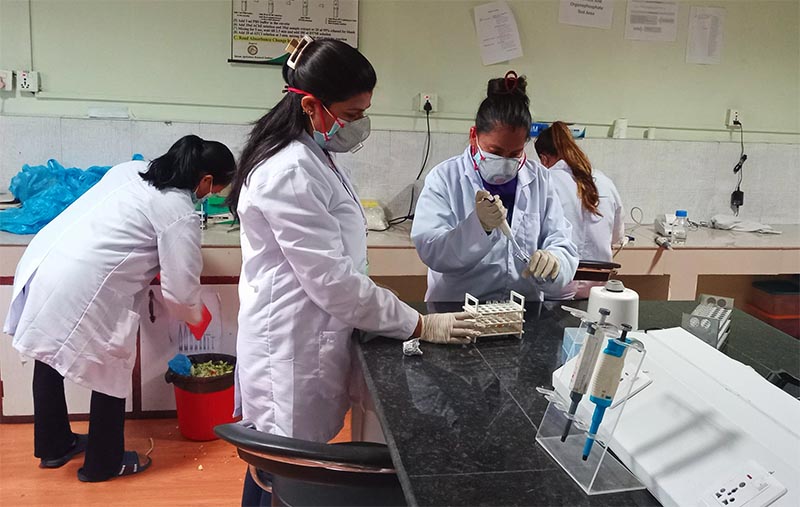
However, the Department of Food Technology and Quality Control has a state-of-the-art laboratory that can identify the names and quantities of pesticides in imported fruits and vegetables. The department has not taken action against offenders after conducting detailed tests on the amount and type of pesticides. Mohan Krishna Maharjan, the department's spokesperson, stated that such detailed testing is only done when a few samples of consumer goods from the market are found to be contaminated with pesticides and there is a need to prosecute the offenders. "The department faces difficulties in conducting such detailed testing at border checkpoints due to a lack of staff and resources," he said.
Under the leadership of the Department of Agriculture, a Rapid Bio-Pesticide Residue Analysis Laboratory (RBPR) was established on June 18, 2014, within the Kalimati Fruits and Vegetable Wholesale Market Development Committee to analyze pesticide residues in vegetable and fruit crops.
Four years later, starting in 2018, seven such laboratories were established in different parts of the country under the Central Agricultural Laboratory of the Department of Agriculture, and regular testing of pesticide residues in vegetables and fruits has been ongoing.
The laboratories lack modern equipment, physical infrastructure, and staff. Twenty-five contract employees are currently performing the tests. Dron Bahadur Budhathoki, a crop protection officer at the Central Agricultural Laboratory, said, "Since these employees are not even provided with risk allowances, they leave quickly, which affects the work of the laboratory."
The Lalitpur Agricultural Development Office, which covers all three districts of the Kathmandu Valley, started a rapid pesticide residue testing program by collecting some samples in the Kathmandu Valley in 2018, but it could not be continued. Bhishma Basnet, a crop protection officer at the Agricultural Development Office, stated that the office is preparing to restart its own RBPR testing from October.
He stated that the office was forced to halt testing because of a lack of staff to run the lab and because farmers who brought samples for RBPR testing would not provide accurate information about their products. They would also deceptively use a test report for a product that was not tested on customers.
Pesticides also found in imported vegetables and fruits
In 2076 (2019/20), the Supreme Court issued an interim order that imported vegetables and fruits could only be sold after being tested for pesticide residues.
After this, on Kartik 7, 2078 (October 24, 2021), the Department of Food Technology and Quality Control began rapid pesticide residue testing of imported vegetables and fruits at seven of its offices across the country. The department claims it is currently collecting and testing samples at 12 major border checkpoints. The Central Agricultural Laboratory also collects and tests samples of imported vegetables and fruits from India at Kalimati. The tests have shown that the amount of pesticides in imported vegetables and fruits is often higher than the prescribed limit.
On Jestha 2, 2080 (May 16, 2023), the Parliamentary Committee on Agriculture, Cooperatives, and Natural Resources directed the government to make it mandatory to test the quality of vegetables before importing and selling them to ensure the full consumption of domestically produced vegetables. However, consumer rights activists state that due to pressure from the Indian government, the testing of pesticides in imported vegetables and fruits at border checkpoints has not been widespread or strict.
Mohan Krishna Maharjan, the spokesperson for the Department of Food Technology and Quality Control, however, claims that the department is regularly testing imported fruits and vegetables, just as the Central Agricultural Laboratory tests domestically produced ones. He asserts that pesticide testing at checkpoints is not weak or lax. "We are regularly conducting RBPR tests on imported vegetables and fruits, but we are finding very few samples that need to be destroyed," he said.
While two government bodies (the Department of Food Technology and Quality Control and the Central Agricultural Laboratory) are collecting samples and performing rapid pesticide residue tests, they are only indicating whether the produce is usable or needs to be destroyed.
According to food safety standards, produce is considered safe to eat if the inhibitory percentage (enzyme inhibition percentage) is less than 35. If it is between 35 and 45 percent, it is held in quarantine and retested. If it is over 45 percent, there is a provision for it to be destroyed. While the department and labs test according to this standard, consumer rights activist Prem Lal Maharjan complains that the regulation of pesticides is not taking place.
Mohan Krishna Maharjan, the spokesperson for the Department of Food Technology and Quality Control, says that while rapid residue testing cannot regulate pesticides, they are fulfilling their mandated responsibilities. "Regulation and control must extend to the farmers. Is the pesticide designated by the state being used in the correct amount and way? After spraying, is it being sent to the market after waiting the prescribed time? It seems there are problems at all three levels of government," he said.
Experts say that it is not appropriate to test imported vegetables only after they arrive in Kalimati. Vegetables that come to the capital are not distributed from Kalimati alone. Vegetables from outside districts go directly to the vegetable markets in all three districts of the Kathmandu Valley.
Jeevan Prabha Lama, former director general of the Department of Food Technology and Quality Control, emphasizes that testing vegetables and fruits after they arrive in major cities and waiting for the results can cause the fresh produce to rot, and the produce may already be consumed by the time the results are in. Therefore, she stresses that strict measures must be implemented at the border checkpoints. "It is not possible to stop pesticide-contaminated vegetables after they arrive in Kalimati. They must be tested at the border itself, and a strict system to prevent them from entering fully should be implemented, but this has not happened," she said.
According to Manoj Pokharel, a senior crop protection officer at the Plant Quarantine and Pesticide Management Center, the state's investment cannot support testing all samples for pesticide residues to determine the type and amount of pesticide. He states that there is a need for proper training, skills, and awareness for farmers on the proper methods and ways to reduce pesticide use and personal precautions. He also says that consumers need to be taught how to consume such pesticide-contaminated vegetables. However, he notes that this has not been a priority for all three levels of government.
Why don't training and technical staff reach the local level?
Although the Lalitpur District Agricultural Development Office is responsible for all three districts of the Kathmandu Valley, it has been unable to conduct training and awareness programs on pesticide use. "We are currently busy with tasks like recommending licenses for new agrovets and renewing existing ones, and completing the necessary procedures for distributing subsidies to farmers," said Bhishma Basnet, a crop protection officer at the office.
Last year, the office provided awareness training on pesticide use to 60 agrovet business owners in the district for the first time. There are a total of 200 pesticide vendors across the Kathmandu Valley, but the central government has stopped allocating budgets for training and awareness programs for them.
The Central Agricultural Laboratory conducted four training sessions last year in Kathmandu and Bhaktapur, where a higher risk was found during pesticide testing. Mahesh Timilsina, the office's information officer, stated that even though the office is responsible for providing awareness and training, they are only able to conduct a few sporadic sessions due to a lack of budget and staff.
Similarly, the Crop Protection Laboratory of Bagmati Province conducted four training sessions on crop treatment last year.
The Crop Protection Laboratory in Pokhara, Gandaki Province, reported that it provided crop treatment and awareness training to 700 farmers last year. There are 417,523 farming households in Gandaki Province.
Local governments have also not shown interest in providing knowledge and skills related to pesticide use awareness. According to Dr. Januka Pandit, a spokesperson for the Ministry of Agriculture and Livestock Development, most local governments do not allocate budgets for agricultural training and pesticide awareness and do not prioritize them.
According to the Ministry of Agriculture, there is also a lack of skilled and technical staff at the local level. The ministry states that there are 4,712 positions for animal-related technicians and 3,012 for agricultural technicians in 753 local governments. However, the ministry does not have accurate data on how many of these positions are filled.
Dr. Januka stated that the provincial Public Service Commission is in the process of recruiting agricultural technicians for local governments, and some positions are being filled by the provinces as well.
According to Mahananda Joshi, an information officer at the ministry, 1,700 agricultural technicians were sent to local governments starting in 2073 (2016/17) to address the shortage of technical staff.
Their job was to provide farmers with technical advice on pest and disease problems and to conduct awareness and training sessions on pesticides. However, Bhishma Basnet, a crop protection officer at the Lalitpur Agricultural Development Office, says that the service provided to the agricultural sector at the local level has become weak because these newly hired young technicians lack technical expertise, knowledge, and experience.
The federal government had made this arrangement for transitional management to solve the problem of a lack of staff at the local level before the provincial Public Service Commission could hire the necessary agricultural technicians. Before federalism, there was a concept of one service center in each village, where one agricultural technician (JTA) would be stationed and provide farmers with the necessary knowledge about pest and pesticide-related problems. Although the federal government has been sending agricultural technicians since 2073 to fill this void, their service has not been effective.
According to Joshi, since the fiscal year 2079/80 (2022/23), the ministry has sent NPR 98.3 million to 188 local governments for the salaries and allowances of one animal technician each. Similarly, it has sent NPR 200 million for 390 agricultural graduate positions.
Even now, technical staff are still not reaching local levels based on need. Even when they do, they are busy distributing subsidies and doing other administrative work. According to Dr. Januka, the spokesperson for the Ministry of Agriculture and Livestock Development, there are problems with farmers' access to technicians and with service delivery at the local and provincial levels. Technical knowledge is not reaching the farmers. It is difficult for the government to reach 4 million farmers across the country at once. "Local governments also have their own responsibilities and can provide training based on need," she says. "However, it seems that many of them do not allocate a budget for agriculture and training and do not prioritize this issue."
Local governments do not appear to prioritize training farmers on how to use pesticides, how to control pests, and how long to wait after spraying before harvesting. "The technical staff working at the local level lack skills and expertise," said Mahesh Timilsina, a crop protection officer at the Central Laboratory.
Farmers are demanding pesticides that can kill pests all at once when their crops are being damaged. A trend has emerged where agrovets fulfill the farmers' demands. "The state has not been able to suggest alternatives to pesticides to farmers, and there is no investment in this area," said Bhojraj Sapkota, head of the Pesticide Management Center.
Dr. Januka, the ministry spokesperson, said that even some who have received training neglect the amount and method of pesticide use.
Dr. Sajan Lal Syawula, a scientist at NAST, says that the government has not done any work on important issues such as providing farmers with pesticide training, awareness, and capacity building, offering technical support, preventing crop diseases, and giving alternatives to pesticides.
Shaligram Adhikari, the head of the Crop Protection Laboratory in Pokhara, states that in the provinces and local governments, there are more administrative staff than technical staff in the agriculture sector. He says that while the technical staff are capable of conducting training and awareness on pest and disease control and pesticides, they are too busy with the distribution of subsidies and other administrative tasks, so technical services are not reaching the farmers.
Banned and expired pesticides still in use
To regulate activities like the production, synthesis, export, import, storage, sale, distribution, transportation, use, and disposal of pesticides and to control their adverse effects on the health of humans and animals and on the environment, the government created the Pesticide Act, 2076 (2019/20).

This act explicitly states that the use of banned pesticides is prohibited. However, taking advantage of the open border, banned pesticides are still being bought and sold. Bhojraj Sapkota, head of the Plant Quarantine and Pesticide Management Center, admits that the state has been unable to control the trafficking of banned pesticides due to the open border.
Just two years ago, a case was filed in the Lalitpur District Court after a pesticide inspector discovered a business trading in banned pesticides and sealed its store.
On Poush 16, 2075 (December 31, 2018), the government issued a notice in the gazette banning the import, sale, distribution, and storage of a pesticide called Carbofuran in Nepal. The same banned pesticide was found at a shop called BG Agrovet at Pokhara City Hall. It was discovered that this pesticide was imported and sold by Budhathoki Agrovet in Lalitpur to the Pokhara vendor.
The investigation revealed that Budhathoki Agrovet in Lalitpur had purchased it from Chaurasiya Seed Store in Bhairahawa and sold it to BG Agrovet in Pokhara. The government filed a case against all three agrovets for importing and selling a banned pesticide in Nepal. The court sentenced all three agrovets to a fine of NPR 50,000 each and one month in prison.
Similarly, there have been instances of the misuse of a banned herbicide called Paraquat. On Shrawan 25 (August 10), a 29-year-old woman from Hetauda Sub-Metropolitan City-8 in Makwanpur died after consuming the herbicide Paraquat. The government had banned this pesticide by issuing a notice in the gazette in 2081 (2024/25). However, a provision allows the use of these pesticides that have already been imported into Nepal until Mangsir 19, 2083 (December 5, 2026).
According to Manoj Pokharel, a senior crop protection officer at the center, after pesticides that have already been imported are banned, it creates a problem with their storage. For this reason, the Pesticide Management Committee itself decides to provide a certain amount of time for their use. The government has yet to build pesticide storage facilities for expired and banned pesticides at the federal and provincial levels. According to him, the government has been progressively banning highly hazardous and severe pesticides after cases of their misuse for suicides began to increase.
"Even after a hazardous pesticide is banned, the Pesticide Management Center continues to conduct awareness programs to protect human lives during the period when its use is still permitted," he said.
Since the amount and quality of pesticides are not being tested, sellers are profiting greatly. Due to a lack of regular monitoring of pesticide sellers and agrovets, they are also selling expired pesticides, which has been found to cause damage to crop production.
Last year, under the Prime Minister's Agricultural Modernization Program, potato crops planted on an area of 60 hectares were destroyed after a fungicide was sprayed on them.
Under the Prime Minister's Agricultural Modernization Program, approximately 62 farmers in Likhu and Panchakanya Rural Municipalities in Nuwakot were provided with seeds and pesticides. A quality issue was found with the fungicide named Mancozeb, worth NPR 200,000, which the government had purchased from a pesticide seller.
Although the pesticide's use led to millions in potato crop losses in the rural municipalities last year, a sample of the pesticide was tested by the Nepal Academy of Science and Technology (NAST). Even though the pesticide label stated that it contained 75% fungicide, the test found that it contained only 0.39% fungicide.
The government decided to fine Dhan Bahadur Khadka from Bhairahawa, who imported the low-quality pesticide, NPR 4 million in compensation. Khadka has already paid NPR 3.2 million to the farmers.
"This mischief by the sellers happened because the government was unable to test the pesticides and monitor the sellers," said Mitralal Paudel, an information officer for the Prime Minister's Agricultural Modernization Program in Nuwakot. "After spraying the low-quality pesticide, many potato plants were damaged, and the same damage occurred to the fruit. Production also decreased. The pesticide situation has reached an extreme level of corruption."
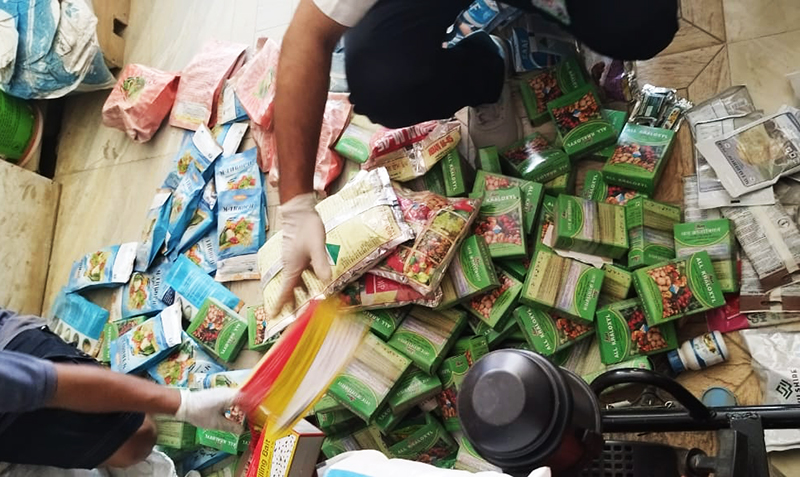
Similarly, during monitoring in Tanahun, four tons of expired fungicides and insecticides were found. The expired pesticides were found at Shree Krishna Tanahun Krishi Suppliers and Pashupati Beej Bhandar in Danauli. Shaligram Adhikari, the head of the Crop Protection Laboratory in Pokhara, said that after sealing the pesticides, they were left in storage at the same shop.
"Rather than taking action against the sellers, we just warned them for the first time and let them go," said Adhikari. The Pesticide Management Committee in Gandaki Province was formed only three months ago.
Good agricultural practices could not become an alternative
To increase the production of pesticide-free agricultural products, the Ministry of Agriculture and Livestock Development attempted to initiate Good Agricultural Practices (GAP) by creating a guideline in 2075 (2018/19).
GAP was introduced to provide healthy and safe food and agricultural products to domestic and foreign consumers, contribute to sustainable agriculture, and promote exports while managing imports.
Although the guideline was created to contribute to food safety, quality production, environmental management, worker health, safety, and welfare, as well as sustainable agriculture, farmers were not attracted to good agricultural practices.
Government officials state that because GAP has strict standards that require a formal certification process, farmers have not been keen to get involved.
Before COVID-19, the Department of Food Technology and Quality Control had certified three farms for practicing GAP. However, they did not continue with the practice.
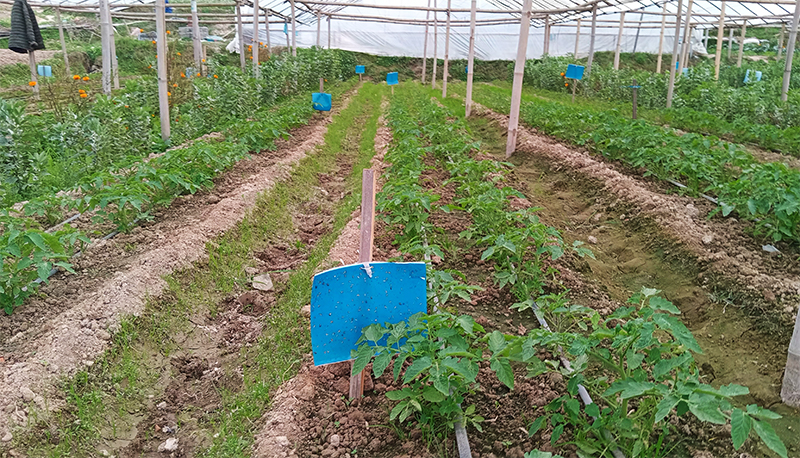
To reduce pesticide consumption or to produce pesticide-free food, vegetables, and lentils, the government implemented the Integrated Pest Management (IPM) program. However, it has not been effectively implemented.
The provincial and local governments have not been able to advance Integrated Pest Management (IPM). It is difficult to find farmers who use the IPM method for vegetable farming. This method of farming, which serves as an alternative to chemical pesticides, is no longer a priority for farmers.
According to the Crop Protection Laboratory Office in Gandaki Province, there are 25 IPM groups with 500 member farmers across all 11 districts of the province. In Bagmati Province, the number of IPM farmer groups is decreasing. According to the Crop Protection Laboratory of Bagmati Province, only eight IPM farmer groups are active in the province, including in Kavre and Dhading. The Ministry of Agriculture reports that it only recently conducted the first training to prepare 20 IPM instructors last year.
Mohan Krishna Maharjan, the spokesperson for the Department of Food Technology and Quality Control, says that pesticide use can only be reduced if the government promotes good agricultural practices by providing subsidies.
Please adhere to our republishing policy if you'd like to republish this story. You can find the guidelines here.
Read this story in Nepali: विषादीको नियमन र नियन्त्रणमा कमजोर राज्य संयन्त्र
Although indiscriminate use of lethal pesticides by farmers in their fields is harming human health, the presence of the state in regulating and controlling pesticides appears to be weak.
According to the National Agricultural Census, 2078 (2021/22), the growth of pests and insects in Nepal is at 60.8%. With the increase of new pests, farmers have started using pesticides even on crops like rice, maize and wheat.
The data from the same census shows that 232,836 farmers use pesticides on maize, wheat and potatoes. Furthermore, 39% of farmers use pesticides on rice.
While the average use of pure pesticide per hectare in Nepal is 396 grams per year, its use on vegetable crops averages 1,605 grams per hectare. A pesticide survey by the Plant Quarantine Office revealed that approximately 80% of pesticides used in agriculture are for vegetable crops. Despite this, a review of pesticide import data over the last four years shows that the volume of imports has doubled.
In the fiscal year 2076/77 (2019/20), pesticides worth Rs. 79,383,946 were imported. This increased to Rs. 2,430,591,400 in the fiscal year 2080/81 (2023/24), according to data from the Plant Quarantine and Pesticide Management Center.
The increase in imports is a direct result of farmers increasing their consumption of pesticides in their fields. Easy and accessible access to pesticides has led to farmers' increased use on crops and vegetables.
While the use of chemical pesticides on food and vegetable crops is increasing, the government has been unable to regulate and control it. The misuse of pesticides has grown because farmers have not been given proper training and technical knowledge about the correct amounts and methods for using approved pesticides.
Instead, the responsibility of teaching farmers how to use and recommend pesticides has fallen to the owners of agrovets, who sell these products. Farmers are relying on the knowledge and recommendations provided by these pesticide vendors, which puts the health of not only the farmers but also the general public at risk.
According to Schedule 8 of the Constitution of Nepal, 2072 (2015), local governments have exclusive rights over agriculture, animal husbandry, agricultural production, and the development of agriculture and animal factories. Furthermore, Schedule 7 of the same constitution places pesticides and medicines on a shared list of powers for both the federal and provincial governments.
The Local Government Operation Act, 2074 (2017) also clarifies that local governments are responsible for farmer training, capacity building, and increasing consumer awareness.
Despite the fact that the constitution and laws grant significant authority to all three levels of government, there is a lack of attention to the regulation and control of chemical pesticides.
The Department of Agriculture, under the Ministry of Agriculture and Livestock Development, has acknowledged that while the risks of pesticide use have increased, they have not been able to mitigate them.
"The responsibility for providing public awareness training and technical services about pesticides rests with all three bodies: the federal, provincial, and local governments," says Jagannath Tiwari, spokesperson for the Department of Agriculture. "A lack of coordination among these three levels, as well as a shortage of technical staff at the local level, has prevented this serious and sensitive issue from being prioritized."
Senior Crop Protection Officer at the Plant Quarantine and Pesticide Management Center, Manoj Pokharel, states that the results of pesticide regulation and control have not been seen because agricultural mechanisms were formed very late after the implementation of federalism, and the process of fulfilling the necessary laws and manpower is still ongoing.
Experts accuse the government of failing to implement the Pesticide Act, 2075 (2018). They claim that the government has been limited to only importing pesticides, banning the registration and use of some deadly pesticides, and issuing licenses to agrovets and sellers for the distribution of pesticides.
"Pesticide imports are increasing but there are problems in regulating and controlling how those pesticides are being used," says entomologist Kashinath Chilwal. "The state is already late in taking steps to reduce pesticide use, provide alternatives to farmers, and teach them how to use pesticides safely."
Six provinces do not have pesticide inspectors
Section 24 of the Pesticide Act, 2076 (2019/20) gives federal and provincial governments the authority to appoint pesticide inspectors.
Section 25 of the same act gives these inspectors important powers, such as monitoring pesticide sellers, making sudden inspections of commercial pesticide use and storage, and, if adulterated or low-quality pesticides are found, halting their sale or sealing off the distribution area.
Despite these significant responsibilities and powers, there are only 26 pesticide inspectors at the federal level and 11 in Gandaki Province. The federal inspectors also serve as crop protection officers. Experts accuse them of not prioritizing pesticide regulation and control because they are primarily responsible for tasks like identifying crop diseases and pests and treating crops.
Shaligram Adhikari, head of the Crop Protection Laboratory in Pokhara, stated that Gandaki Province appointed 11 pesticide inspectors in all districts except for Manang and Mustang three months ago. He noted that due to a lack of resources, technical expertise and infrastructure, the province has not been able to make a significant contribution to pesticide regulation and control. He also added that the agriculture sector is not a priority for elected representatives.
The other provinces have not appointed any pesticide inspectors. "Since the provinces have not been able to appoint pesticide inspectors, agrovets are not being monitored," says Sudhir Paudel, head of the Crop Protection Laboratory in Bagmati Province. "We haven't even been able to show the office's presence in the field."
Even though Koshi Province issued the Pesticide Act, 2081 (2024) last February, it has not yet appointed any pesticide inspectors. Dr. Sharan Kumar Pandey, Secretary of the Ministry of Industry, Agriculture and Cooperatives for Koshi Province, stated that while the act is in place, the regulations are in their final stages and pesticide inspectors will only be appointed after the regulations are finalized.
This year, Bagmati Province has only drafted and sent the Pesticide Act to the Ministry of Agriculture and Livestock Development. The other four provinces have not been able to introduce a provincial Pesticide Act, even eight years after the implementation of federalism.
Section 40 of the Pesticide Act gives the responsibility for monitoring to a Pesticide Management Committee, which is to be formed in each province. However, since the provinces have not been able to introduce their own acts, these committees do not exist.
"There is no coordination between the federal and provincial governments to regulate pesticides and agrovets," said Santosh Pandey, an agricultural officer in Panauti Municipality, Kavre. "It's difficult for local governments to carry out such tasks due to a lack of agricultural staff and resources."
Pesticide residue rapid testing limited to formality
Pesticide residue rapid testing is conducted to determine whether vegetables and fruits produced with pesticides are safe to eat, unsafe, require a waiting period, or must be destroyed. The Central Agricultural Laboratory has the authority to test pesticides in domestically produced agricultural products and fruits, while the Department of Food Technology and Quality Control is authorized to test imported ones.
There are 12 pesticide residue rapid testing laboratories located in Jhapa, Sarlahi, Kathmandu, Kaski, Rupandehi, Banke, Kailali, Dharan, Kawasoti, Sindhuli, Dhalkebar and Surkhet. However, these labs are not equipped to test for residues of all the pesticides used in Nepal.
The government has also authorized the sale and purchase of pesticides from groups other than carbamates and organophosphates. Farmers are also using neonicotinoid pesticides to control pests in their fields. However, according to Dr. Shanta Karki, head of the Central Agricultural Laboratory, only residues from the carbamate and organophosphate groups are currently being tested through rapid testing.
"We are only focused on testing carbamate and organophosphate insecticides. Our labs also lack the capacity and staff to test for other groups of pesticides," said Dr. Januka Pandit, spokesperson for the Ministry of Agriculture. According to Mahesh Timilsena, the information officer at the Central Agricultural Laboratory, there are plans to purchase a GC-MS (Gas Chromatography–Mass Spectrometry) device, which can conduct detailed testing on the amount and type of pesticides, at a cost of approximately Rs. 1 crore within this fiscal year.
However, the Department of Food Technology and Quality Control has a state-of-the-art laboratory that can identify the names and quantities of pesticides in imported fruits and vegetables. The department has not taken action against offenders after conducting detailed tests on the amount and type of pesticides. Mohan Krishna Maharjan, the department's spokesperson, stated that such detailed testing is only done when a few samples of consumer goods from the market are found to be contaminated with pesticides and there is a need to prosecute the offenders. "The department faces difficulties in conducting such detailed testing at border checkpoints due to a lack of staff and resources," he said.
Under the leadership of the Department of Agriculture, a Rapid Bio-Pesticide Residue Analysis Laboratory (RBPR) was established on June 18, 2014, within the Kalimati Fruits and Vegetable Wholesale Market Development Committee to analyze pesticide residues in vegetable and fruit crops.
Four years later, starting in 2018, seven such laboratories were established in different parts of the country under the Central Agricultural Laboratory of the Department of Agriculture, and regular testing of pesticide residues in vegetables and fruits has been ongoing.
The laboratories lack modern equipment, physical infrastructure, and staff. Twenty-five contract employees are currently performing the tests. Dron Bahadur Budhathoki, a crop protection officer at the Central Agricultural Laboratory, said, "Since these employees are not even provided with risk allowances, they leave quickly, which affects the work of the laboratory."
The Lalitpur Agricultural Development Office, which covers all three districts of the Kathmandu Valley, started a rapid pesticide residue testing program by collecting some samples in the Kathmandu Valley in 2018, but it could not be continued. Bhishma Basnet, a crop protection officer at the Agricultural Development Office, stated that the office is preparing to restart its own RBPR testing from October.
He stated that the office was forced to halt testing because of a lack of staff to run the lab and because farmers who brought samples for RBPR testing would not provide accurate information about their products. They would also deceptively use a test report for a product that was not tested on customers.
Pesticides also found in imported vegetables and fruits
In 2076 (2019/20), the Supreme Court issued an interim order that imported vegetables and fruits could only be sold after being tested for pesticide residues.
After this, on Kartik 7, 2078 (October 24, 2021), the Department of Food Technology and Quality Control began rapid pesticide residue testing of imported vegetables and fruits at seven of its offices across the country. The department claims it is currently collecting and testing samples at 12 major border checkpoints. The Central Agricultural Laboratory also collects and tests samples of imported vegetables and fruits from India at Kalimati. The tests have shown that the amount of pesticides in imported vegetables and fruits is often higher than the prescribed limit.
On Jestha 2, 2080 (May 16, 2023), the Parliamentary Committee on Agriculture, Cooperatives, and Natural Resources directed the government to make it mandatory to test the quality of vegetables before importing and selling them to ensure the full consumption of domestically produced vegetables. However, consumer rights activists state that due to pressure from the Indian government, the testing of pesticides in imported vegetables and fruits at border checkpoints has not been widespread or strict.
Mohan Krishna Maharjan, the spokesperson for the Department of Food Technology and Quality Control, however, claims that the department is regularly testing imported fruits and vegetables, just as the Central Agricultural Laboratory tests domestically produced ones. He asserts that pesticide testing at checkpoints is not weak or lax. "We are regularly conducting RBPR tests on imported vegetables and fruits, but we are finding very few samples that need to be destroyed," he said.
While two government bodies (the Department of Food Technology and Quality Control and the Central Agricultural Laboratory) are collecting samples and performing rapid pesticide residue tests, they are only indicating whether the produce is usable or needs to be destroyed.
According to food safety standards, produce is considered safe to eat if the inhibitory percentage (enzyme inhibition percentage) is less than 35. If it is between 35 and 45 percent, it is held in quarantine and retested. If it is over 45 percent, there is a provision for it to be destroyed. While the department and labs test according to this standard, consumer rights activist Prem Lal Maharjan complains that the regulation of pesticides is not taking place.
Mohan Krishna Maharjan, the spokesperson for the Department of Food Technology and Quality Control, says that while rapid residue testing cannot regulate pesticides, they are fulfilling their mandated responsibilities. "Regulation and control must extend to the farmers. Is the pesticide designated by the state being used in the correct amount and way? After spraying, is it being sent to the market after waiting the prescribed time? It seems there are problems at all three levels of government," he said.
Experts say that it is not appropriate to test imported vegetables only after they arrive in Kalimati. Vegetables that come to the capital are not distributed from Kalimati alone. Vegetables from outside districts go directly to the vegetable markets in all three districts of the Kathmandu Valley.
Jeevan Prabha Lama, former director general of the Department of Food Technology and Quality Control, emphasizes that testing vegetables and fruits after they arrive in major cities and waiting for the results can cause the fresh produce to rot, and the produce may already be consumed by the time the results are in. Therefore, she stresses that strict measures must be implemented at the border checkpoints. "It is not possible to stop pesticide-contaminated vegetables after they arrive in Kalimati. They must be tested at the border itself, and a strict system to prevent them from entering fully should be implemented, but this has not happened," she said.
According to Manoj Pokharel, a senior crop protection officer at the Plant Quarantine and Pesticide Management Center, the state's investment cannot support testing all samples for pesticide residues to determine the type and amount of pesticide. He states that there is a need for proper training, skills, and awareness for farmers on the proper methods and ways to reduce pesticide use and personal precautions. He also says that consumers need to be taught how to consume such pesticide-contaminated vegetables. However, he notes that this has not been a priority for all three levels of government.
Why don't training and technical staff reach the local level?
Although the Lalitpur District Agricultural Development Office is responsible for all three districts of the Kathmandu Valley, it has been unable to conduct training and awareness programs on pesticide use. "We are currently busy with tasks like recommending licenses for new agrovets and renewing existing ones, and completing the necessary procedures for distributing subsidies to farmers," said Bhishma Basnet, a crop protection officer at the office.
Last year, the office provided awareness training on pesticide use to 60 agrovet business owners in the district for the first time. There are a total of 200 pesticide vendors across the Kathmandu Valley, but the central government has stopped allocating budgets for training and awareness programs for them.
The Central Agricultural Laboratory conducted four training sessions last year in Kathmandu and Bhaktapur, where a higher risk was found during pesticide testing. Mahesh Timilsina, the office's information officer, stated that even though the office is responsible for providing awareness and training, they are only able to conduct a few sporadic sessions due to a lack of budget and staff.
Similarly, the Crop Protection Laboratory of Bagmati Province conducted four training sessions on crop treatment last year.
The Crop Protection Laboratory in Pokhara, Gandaki Province, reported that it provided crop treatment and awareness training to 700 farmers last year. There are 417,523 farming households in Gandaki Province.
Local governments have also not shown interest in providing knowledge and skills related to pesticide use awareness. According to Dr. Januka Pandit, a spokesperson for the Ministry of Agriculture and Livestock Development, most local governments do not allocate budgets for agricultural training and pesticide awareness and do not prioritize them.
According to the Ministry of Agriculture, there is also a lack of skilled and technical staff at the local level. The ministry states that there are 4,712 positions for animal-related technicians and 3,012 for agricultural technicians in 753 local governments. However, the ministry does not have accurate data on how many of these positions are filled.
Dr. Januka stated that the provincial Public Service Commission is in the process of recruiting agricultural technicians for local governments, and some positions are being filled by the provinces as well.
According to Mahananda Joshi, an information officer at the ministry, 1,700 agricultural technicians were sent to local governments starting in 2073 (2016/17) to address the shortage of technical staff.
Their job was to provide farmers with technical advice on pest and disease problems and to conduct awareness and training sessions on pesticides. However, Bhishma Basnet, a crop protection officer at the Lalitpur Agricultural Development Office, says that the service provided to the agricultural sector at the local level has become weak because these newly hired young technicians lack technical expertise, knowledge, and experience.
The federal government had made this arrangement for transitional management to solve the problem of a lack of staff at the local level before the provincial Public Service Commission could hire the necessary agricultural technicians. Before federalism, there was a concept of one service center in each village, where one agricultural technician (JTA) would be stationed and provide farmers with the necessary knowledge about pest and pesticide-related problems. Although the federal government has been sending agricultural technicians since 2073 to fill this void, their service has not been effective.
According to Joshi, since the fiscal year 2079/80 (2022/23), the ministry has sent NPR 98.3 million to 188 local governments for the salaries and allowances of one animal technician each. Similarly, it has sent NPR 200 million for 390 agricultural graduate positions.
Even now, technical staff are still not reaching local levels based on need. Even when they do, they are busy distributing subsidies and doing other administrative work. According to Dr. Januka, the spokesperson for the Ministry of Agriculture and Livestock Development, there are problems with farmers' access to technicians and with service delivery at the local and provincial levels. Technical knowledge is not reaching the farmers. It is difficult for the government to reach 4 million farmers across the country at once. "Local governments also have their own responsibilities and can provide training based on need," she says. "However, it seems that many of them do not allocate a budget for agriculture and training and do not prioritize this issue."
Local governments do not appear to prioritize training farmers on how to use pesticides, how to control pests, and how long to wait after spraying before harvesting. "The technical staff working at the local level lack skills and expertise," said Mahesh Timilsina, a crop protection officer at the Central Laboratory.
Farmers are demanding pesticides that can kill pests all at once when their crops are being damaged. A trend has emerged where agrovets fulfill the farmers' demands. "The state has not been able to suggest alternatives to pesticides to farmers, and there is no investment in this area," said Bhojraj Sapkota, head of the Pesticide Management Center.
Dr. Januka, the ministry spokesperson, said that even some who have received training neglect the amount and method of pesticide use.
Dr. Sajan Lal Syawula, a scientist at NAST, says that the government has not done any work on important issues such as providing farmers with pesticide training, awareness, and capacity building, offering technical support, preventing crop diseases, and giving alternatives to pesticides.
Shaligram Adhikari, the head of the Crop Protection Laboratory in Pokhara, states that in the provinces and local governments, there are more administrative staff than technical staff in the agriculture sector. He says that while the technical staff are capable of conducting training and awareness on pest and disease control and pesticides, they are too busy with the distribution of subsidies and other administrative tasks, so technical services are not reaching the farmers.
Banned and expired pesticides still in use
To regulate activities like the production, synthesis, export, import, storage, sale, distribution, transportation, use, and disposal of pesticides and to control their adverse effects on the health of humans and animals and on the environment, the government created the Pesticide Act, 2076 (2019/20).
This act explicitly states that the use of banned pesticides is prohibited. However, taking advantage of the open border, banned pesticides are still being bought and sold. Bhojraj Sapkota, head of the Plant Quarantine and Pesticide Management Center, admits that the state has been unable to control the trafficking of banned pesticides due to the open border.
Just two years ago, a case was filed in the Lalitpur District Court after a pesticide inspector discovered a business trading in banned pesticides and sealed its store.
On Poush 16, 2075 (December 31, 2018), the government issued a notice in the gazette banning the import, sale, distribution, and storage of a pesticide called Carbofuran in Nepal. The same banned pesticide was found at a shop called BG Agrovet at Pokhara City Hall. It was discovered that this pesticide was imported and sold by Budhathoki Agrovet in Lalitpur to the Pokhara vendor.
The investigation revealed that Budhathoki Agrovet in Lalitpur had purchased it from Chaurasiya Seed Store in Bhairahawa and sold it to BG Agrovet in Pokhara. The government filed a case against all three agrovets for importing and selling a banned pesticide in Nepal. The court sentenced all three agrovets to a fine of NPR 50,000 each and one month in prison.
Similarly, there have been instances of the misuse of a banned herbicide called Paraquat. On Shrawan 25 (August 10), a 29-year-old woman from Hetauda Sub-Metropolitan City-8 in Makwanpur died after consuming the herbicide Paraquat. The government had banned this pesticide by issuing a notice in the gazette in 2081 (2024/25). However, a provision allows the use of these pesticides that have already been imported into Nepal until Mangsir 19, 2083 (December 5, 2026).
According to Manoj Pokharel, a senior crop protection officer at the center, after pesticides that have already been imported are banned, it creates a problem with their storage. For this reason, the Pesticide Management Committee itself decides to provide a certain amount of time for their use. The government has yet to build pesticide storage facilities for expired and banned pesticides at the federal and provincial levels. According to him, the government has been progressively banning highly hazardous and severe pesticides after cases of their misuse for suicides began to increase.
"Even after a hazardous pesticide is banned, the Pesticide Management Center continues to conduct awareness programs to protect human lives during the period when its use is still permitted," he said.
Since the amount and quality of pesticides are not being tested, sellers are profiting greatly. Due to a lack of regular monitoring of pesticide sellers and agrovets, they are also selling expired pesticides, which has been found to cause damage to crop production.
Last year, under the Prime Minister's Agricultural Modernization Program, potato crops planted on an area of 60 hectares were destroyed after a fungicide was sprayed on them.
Under the Prime Minister's Agricultural Modernization Program, approximately 62 farmers in Likhu and Panchakanya Rural Municipalities in Nuwakot were provided with seeds and pesticides. A quality issue was found with the fungicide named Mancozeb, worth NPR 200,000, which the government had purchased from a pesticide seller.
Although the pesticide's use led to millions in potato crop losses in the rural municipalities last year, a sample of the pesticide was tested by the Nepal Academy of Science and Technology (NAST). Even though the pesticide label stated that it contained 75% fungicide, the test found that it contained only 0.39% fungicide.
The government decided to fine Dhan Bahadur Khadka from Bhairahawa, who imported the low-quality pesticide, NPR 4 million in compensation. Khadka has already paid NPR 3.2 million to the farmers.
"This mischief by the sellers happened because the government was unable to test the pesticides and monitor the sellers," said Mitralal Paudel, an information officer for the Prime Minister's Agricultural Modernization Program in Nuwakot. "After spraying the low-quality pesticide, many potato plants were damaged, and the same damage occurred to the fruit. Production also decreased. The pesticide situation has reached an extreme level of corruption."
Similarly, during monitoring in Tanahun, four tons of expired fungicides and insecticides were found. The expired pesticides were found at Shree Krishna Tanahun Krishi Suppliers and Pashupati Beej Bhandar in Danauli. Shaligram Adhikari, the head of the Crop Protection Laboratory in Pokhara, said that after sealing the pesticides, they were left in storage at the same shop.
"Rather than taking action against the sellers, we just warned them for the first time and let them go," said Adhikari. The Pesticide Management Committee in Gandaki Province was formed only three months ago.
Good agricultural practices could not become an alternative
To increase the production of pesticide-free agricultural products, the Ministry of Agriculture and Livestock Development attempted to initiate Good Agricultural Practices (GAP) by creating a guideline in 2075 (2018/19).
GAP was introduced to provide healthy and safe food and agricultural products to domestic and foreign consumers, contribute to sustainable agriculture, and promote exports while managing imports.
Although the guideline was created to contribute to food safety, quality production, environmental management, worker health, safety, and welfare, as well as sustainable agriculture, farmers were not attracted to good agricultural practices.
Government officials state that because GAP has strict standards that require a formal certification process, farmers have not been keen to get involved.
Before COVID-19, the Department of Food Technology and Quality Control had certified three farms for practicing GAP. However, they did not continue with the practice.
To reduce pesticide consumption or to produce pesticide-free food, vegetables, and lentils, the government implemented the Integrated Pest Management (IPM) program. However, it has not been effectively implemented.
The provincial and local governments have not been able to advance Integrated Pest Management (IPM). It is difficult to find farmers who use the IPM method for vegetable farming. This method of farming, which serves as an alternative to chemical pesticides, is no longer a priority for farmers.
According to the Crop Protection Laboratory Office in Gandaki Province, there are 25 IPM groups with 500 member farmers across all 11 districts of the province. In Bagmati Province, the number of IPM farmer groups is decreasing. According to the Crop Protection Laboratory of Bagmati Province, only eight IPM farmer groups are active in the province, including in Kavre and Dhading. The Ministry of Agriculture reports that it only recently conducted the first training to prepare 20 IPM instructors last year.
Mohan Krishna Maharjan, the spokesperson for the Department of Food Technology and Quality Control, says that pesticide use can only be reduced if the government promotes good agricultural practices by providing subsidies.
Please adhere to our republishing policy if you'd like to republish this story. You can find the guidelines here.